



The Tape Measure, Not the Scale: What Berberine Trials Measured Around the Waist (And Why "Nature's Ozempic" Misleads)

Chapter 1
A Nickname Goes Viral
Somewhere between a research abstract and a fifteen-second video, a yellow powder from the roots of a few modest plants picked up a nickname no marketing team could have bought: Nature's Ozempic. It travelled from one feed to the next, usually next to a before-and-after photo.
It is easy to see why the label stuck. Prescription weight-loss injections are among the most talked-about medicines of the decade. A capsule made from a plant sounds like their gentler, cheaper relative.
But a nickname is a claim, and claims can be checked. Berberine has been tested in dozens of randomised trials. Those trials measured specific things, in specific people, at specific doses. This article reads what they actually recorded.
The trials did not find a drug-like drop on the scale. They found something smaller and more specific: changes around the waist and in the blood.
We go in order. First, the nickname and the medicine it borrows its name from. Then the pooled trial data on weight, BMI and waist. Then the blood lipids, and why a tape measure and a scale can disagree. Finally, how the trials dosed berberine, and how to use it sensibly.
Section 1
Where the Label Came From
Berberine is a bright yellow plant compound, an alkaloid, found in the roots and bark of several plants. The best known are goldthread (Coptis chinensis), barberry and the Amur cork tree (Phellodendron).
It has a long history in traditional Chinese and Ayurvedic practice. Its modern reputation, though, comes from clinical research: randomised trials, many of them run in China and Iran, that gave adults berberine and measured blood lipids, blood sugar markers and body measurements.
Some of those trials reported changes in body measurements. On social media, "changes in body measurements" quietly became "works like Ozempic". That jump is what this article checks.
Ozempic is a brand name for semaglutide, a prescription medicine. It belongs to a class modelled on a gut hormone called GLP-1. Berberine is not a GLP-1 medicine. It is a plant alkaloid, taken by mouth, sold in Europe as a food supplement.

The nickname travelled faster than the trials behind it.
Section 2
What the Medicine Did in Its Own Trial
To judge the nickname fairly, start with the medicine it names. The landmark weight-management trial for semaglutide is STEP 1, published in the New England Journal of Medicine in 2021.
It enrolled 1,961 adults with a BMI of 30 or more, or 27 or more with at least one weight-related condition. None had diabetes. They were randomly assigned to a weekly injection of semaglutide 2.4 mg or a placebo, both alongside a lifestyle programme, for 68 weeks.
The result was large. Average body weight fell by 14.9% with semaglutide, compared with 2.4% with placebo: about 15.3 kg versus 2.6 kg. Half of the semaglutide group lost 15% or more of their starting weight.
| Detail | STEP 1 (semaglutide 2.4 mg) |
|---|---|
| Who | 1,961 adults with overweight or obesity, without diabetes |
| How it was given | Once-weekly injection under the skin, plus a lifestyle programme |
| Duration | 68 weeks |
| Average weight change | −14.9% (about −15.3 kg) versus −2.4% (about −2.6 kg) with placebo |
| Most common side effects | Nausea and diarrhoea, usually mild to moderate and temporary |
| Type of study | Randomised, double-blind, placebo-controlled trial, funded by the manufacturer |
That is the benchmark the nickname borrows: a prescription medicine, injected under medical supervision, studied for well over a year in nearly two thousand people. Its headline number was measured on the scale.
Section 3
The Fair Question
So the fair question is not "is berberine as strong as semaglutide?" They are different substances, taken in different ways, studied in different people.
The fair question is simpler: what did berberine's own trials measure, and what did they find?
The answer is more interesting than the nickname. When researchers pooled the trials, the scale barely moved. The tape measure did.
There is a practical reason to care. Expectations shape behaviour. Someone who expects a drug-like drop on the scale, and sees nothing after a month, is likely to give up, even though the scale was never where berberine's trials found movement.
In plain words
"Nature's Ozempic" compares berberine with a prescription injection that lowered body weight by about 15% in a 68-week trial. Berberine's own trials tell a different, more modest story, and knowing it is the best way to set expectations before you start.
Chapter 1 · 3 questions
Test Your Longevity IQ: Chapter 1 Quick Quiz
Question 1
What does the "Nature's Ozempic" nickname compare berberine to?
A vitamin
A prescription weight-loss medicine
A probiotic
Caffeine
Reveal Answer
Correct Answer: B.
Ozempic is a brand name for semaglutide, a prescription medicine. The nickname suggests berberine works like it.
Question 2
Is berberine a GLP-1 medicine?
Yes
Only in high doses
No, it is a plant alkaloid
Only as an injection
Reveal Answer
Correct Answer: C.
Berberine is a yellow alkaloid from plants such as goldthread, barberry and the Amur cork tree. It is taken by mouth as a food supplement.
Question 3
This article judges berberine by...
Social media posts
What its own trials measured
Sales figures
Taste
Reveal Answer
Correct Answer: B.
The fair test is what berberine's own randomised trials measured. That means weight, BMI, waist and blood lipids, read in the people and doses studied.
Chapter 2
Ten Trials, One Surprise
A single small trial can say almost anything. That is why researchers pool them. In 2020, a team from China, Iran, the UK and Romania gathered the randomised trials that gave people berberine and measured their body size, and combined the results.
The analysis, published in Complementary Therapies in Clinical Practice, included 10 trials. It looked at three measurements: body weight, body mass index (BMI) and waist circumference.
Three rulers, applied to the same question. They did not give the same answer.
Section 1
Weight, BMI and Waist: Three Different Answers
On body weight, berberine made no meaningful difference. The pooled change was −0.11 kg, and it was not statistically significant. That is roughly the weight of an apple, well within what chance could produce.
On BMI, there was a small but statistically significant fall of 0.29 kg/m².
On waist circumference, the change was clearer. The abstract reports an average reduction of 2.75 cm. A separate figure in the paper's results is smaller, about 1.8 cm. Either way, the order of size is roughly two centimetres.
| Measure | Pooled change with berberine | Significant? | People in the analysis |
|---|---|---|---|
| Body weight | −0.11 kg | No | about 378 |
| BMI | −0.29 kg/m² | Yes | about 983 |
| Waist circumference | about −1.8 to −2.75 cm | Yes | about 841 |
Why use three measures at all? Because each answers a slightly different question. Weight is the total. BMI adjusts that total for height, so people of different sizes can be compared. Waist circumference tells you where on the body a change happens.
That is the surprise in this chapter's title. If berberine were a weight-loss drug in disguise, weight would be the first number to move. Instead, the scale stayed essentially flat while the tape measure moved.
On the scale: about 100 grams, not significant. Around the waist: about two centimetres.

Two different instruments: one weighs everything, the other measures around the middle.
Section 2
Who Was Studied, at What Dose
Context matters as much as the numbers. The participants were adults aged roughly 26 to 65, most of them women.
Most were living with a metabolic condition: type 2 diabetes, polycystic ovary syndrome (PCOS), non-alcoholic fatty liver disease or metabolic syndrome. The trials took place mainly in China and Iran, with others in Italy and Mexico.
Daily doses ranged from 1,000 to 3,000 mg of berberine. The trials lasted between 4 and 52 weeks.
| Detail | Xiong et al. 2020 (meta-analysis) |
|---|---|
| Trials included | 10 randomised trials |
| Who | Adults aged about 26 to 65, mostly women, mostly with metabolic conditions |
| Where | China, Iran, Italy and Mexico |
| Daily dose | 1,000 to 3,000 mg of berberine |
| Duration | 4 to 52 weeks |
| Type of study | Systematic review and dose-response meta-analysis of randomised trials |
Two things follow from this. First, the results describe people whose metabolism was, on average, already under strain. We cannot assume the same numbers apply to everyone.
Second, the doses were substantial: at least a gram a day, every day, for weeks to months. The authors also found that the changes in BMI and waist were related to how long people took berberine.
Section 3
The Limits the Authors Listed
Good meta-analyses state their weaknesses, and this one did. The individual trials were small.
Results for waist circumference varied a lot from trial to trial; statisticians call this heterogeneity. The authors also could not rule out publication bias: small studies with unexciting results are less likely to be published, which can make pooled effects look larger than they are.
There is a puzzle in the data, too. Body weight did not change, yet BMI, which is calculated from weight and height, did. One reason is that different trials reported different measures: the weight result rests on about 378 people, BMI on nearly a thousand. The authors described the evidence on weight as equivocal.
None of this makes the waist finding meaningless. It makes it modest and specific: a small average change around the middle, in adults with metabolic conditions, at one to three grams a day.
The compound in this article, in a daily serving

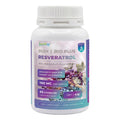
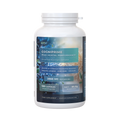
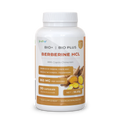
Bio-Enhanced Berberine HCL · 90 Capsules
Each two-capsule serving provides 800 mg of berberine HCl from two plant sources: 400 mg from goldthread (Coptis chinensis) and 400 mg from Amur cork tree bark (Phellodendron), plus 50 mg grape seed extract and 15 mg piperine from black pepper. 90 vegan capsules: a 45-day supply at two capsules a day.
Who it suits: adults who have read what the trials measured, want to take berberine consistently with meals for months, and would rather track a tape measure and their routine blood work than the scale.
The trials in this article used 1,000 to 3,000 mg of berberine a day, mostly in adults with metabolic conditions; one serving provides 800 mg berberine HCl. If you take any medicines, speak to your doctor first.
Add to cart · €49.95 →See full detailsOr pass the Final Master Quiz below first: 4 out of 5 unlocks your reader reward.
Chapter 2 · 3 questions
Test Your Longevity IQ: Chapter 2 Quick Quiz
Question 1
In the 2020 meta-analysis, what was the pooled change in body weight?
About −0.1 kg, not significant
−5 kg
−10 kg
+2 kg
Reveal Answer
Correct Answer: A.
The pooled change in body weight was −0.11 kg, which was not statistically significant. On average, the scale barely moved.
Question 2
Which measure fell significantly?
Height
Heart rate
Shoe size
Waist circumference
Reveal Answer
Correct Answer: D.
Waist circumference fell by roughly two centimetres on average. BMI also fell slightly, while body weight did not change significantly.
Question 3
What daily doses did the pooled trials use?
10 to 30 mg
100 to 300 mg
1,000 to 3,000 mg
10 g
Reveal Answer
Correct Answer: C.
The trials gave between 1,000 and 3,000 mg of berberine a day. They lasted between 4 and 52 weeks.
🔒 LOCKED: READER REWARD
There is a reader reward waiting at the end of this article.
Read the next two chapters closely. Score at least 4 out of 5 on the Final Master Quiz at the bottom of the page and you unlock a 24-hour head start on our biggest event of the year: registered readers get in a full day before everyone else.
Every answer is in the chapters ahead…
[ Jump to the Final Master Quiz → ]Chapter 3
The Bigger Picture
One meta-analysis is a snapshot. To see whether the waist finding holds up, and what else moves, it helps to take the widest view available: an umbrella review, which pools the meta-analyses themselves.
If the waist result were a fluke of ten small trials, it should fade in a wider view. If it is real but modest, it should stay roughly the same size. That is the test.
Section 1
The Umbrella Review: Lipids and Waist
In 2023, Kavyani and colleagues published an umbrella review in the journal PharmaNutrition, covering meta-analyses of berberine trials published up to December 2022.
Their summary: berberine was associated with lower LDL cholesterol, total cholesterol and triglycerides, and a slight rise in HDL cholesterol.
Waist circumference fell by about 1.3 cm. Body weight and BMI did not change significantly. In this wider view, even the small BMI change from 2020 was no longer significant, while the waist change stayed.
Most lipid effects in that review were reported as standardised effect sizes, a statistical unit without millimoles. The most honest word for them is modest.
For figures you can set beside a blood test, a 2023 meta-analysis in the journal Drugs is useful. It pooled 18 placebo-controlled trials with 1,788 adults with raised blood lipids, mostly in mainland China and Hong Kong, lasting 4 to 24 weeks.
| Blood marker | Average change with berberine versus placebo |
|---|---|
| LDL cholesterol | −0.46 mmol/L (14 trials) |
| Total cholesterol | −0.48 mmol/L (17 trials) |
| Triglycerides | −0.34 mmol/L (18 trials) |
| HDL cholesterol | +0.06 mmol/L overall; +0.11 in women, no clear change in men |
| Apolipoprotein B | −0.25 g/L (only 2 trials) |
| Type of study | Systematic review and meta-analysis of randomised placebo-controlled trials |
The authors' own conclusion was measured: berberine produces small reductions in LDL cholesterol, triglycerides and apolipoprotein B. They called for larger trials that also track clinical outcomes.
Notice where the movement is: in the blood panel and around the waist. Not on the scale.
Two instruments recorded the changes: a tape measure and a blood test. The scale was the one that stayed quiet.

Blood lipids were the second place the trials looked, and where the pooled changes showed up.
Section 2
Why the Tape and the Scale Can Disagree
How can the waist shrink while weight stays the same? Because the two tools measure different things.
A bathroom scale weighs everything at once: water, muscle, bone, organs, the food in your gut, and body fat. Day-to-day shifts in water and food can move it on their own.
A tape measure around the waist records something narrower: the circumference of the middle of the body, where fat stored around the abdomen sits. That is why researchers use it as a simple marker alongside weight, and why it can change while the total barely moves.
A small trial from Mexico shows what this looks like in real numbers. In 2013, Pérez-Rubio and colleagues randomly assigned 24 adults with metabolic syndrome to 500 mg of berberine three times a day before meals, or a placebo, for three months.
In the berberine group, average waist circumference in women went from 106 to 103 cm. Triglycerides went from 2.4 to 1.4 mmol/L, and systolic blood pressure from 123 to 115 mmHg.
With 12 people per group, this is a small study, and those figures are before-and-after changes within the berberine group. It is an illustration, not proof on its own. But it matches the pattern of the pooled data.
In plain words
Weight is a total. Waist is a location. A change in one does not have to show up in the other, and in the pooled berberine trials it did not.
Section 3
Realistic Expectations
Put the chapters together and a realistic picture emerges. In trials, mostly in adults with metabolic conditions, berberine at 1 to 3 grams a day went with a waist reduction of roughly one to three centimetres over weeks to months, and modest changes in blood lipids. Average body weight did not change.
That is not a failure to live up to a nickname. It is a different kind of result: the kind of numbers a doctor reads on a routine blood panel, and a tailor reads with a tape.
It also tells you how to judge berberine for yourself. Use a tape measure, at the same spot and the same time of day, every few weeks. Use your routine blood test if your doctor checks lipids.
If you step on the scale expecting a drug-like drop, you are reading the wrong instrument.
Those expectations come with a time scale, too. The pooled trials ran for weeks to months, and the 2020 analysis linked longer use with larger changes in waist and BMI. A fair personal test of berberine is measured in months, not in a fortnight.
Chapter 3 · 3 questions
Test Your Longevity IQ: Chapter 3 Quick Quiz
Question 1
Which blood lipid rose slightly with berberine?
LDL cholesterol
Triglycerides
HDL cholesterol
Total cholesterol
Reveal Answer
Correct Answer: C.
HDL cholesterol rose slightly, while LDL, total cholesterol and triglycerides fell. In the Drugs meta-analysis, the HDL rise was seen in women rather than men.
Question 2
What was the pooled waist change in the umbrella review?
About −1.3 cm
−13 cm
+1.3 cm
No change
Reveal Answer
Correct Answer: A.
The umbrella review found a waist reduction of about 1.3 cm. Body weight and BMI did not change significantly.
Question 3
Why can the waist fall while weight does not?
The tape and the scale measure different things
Scales are always broken
Waists always grow
The trials lasted one day
Reveal Answer
Correct Answer: A.
A scale weighs everything at once, from water to bone. A tape measures one location, the middle of the body, so the two can move independently.
Chapter 4
Using It Sensibly
Reading trials well is half the job. The other half is using berberine in a way that matches what was tested: the dose, the timing, and who should check with a doctor first.
None of this is complicated. It is simply easy to skip when the conversation starts with a nickname.
Section 1
How the Trials Dosed It
Across the pooled trials, daily doses ran from 1,000 to 3,000 mg of berberine. In the Mexican trial from Chapter 3, the 1,500 mg daily dose was split into three 500 mg doses before meals.
The trials lasted from four weeks to a year. Their measurements were taken after weeks or months of daily use, not after a few days.
That gives three practical points drawn straight from the research: take it every day, take it with meals, and give it months rather than days before you judge it by the tape measure.
If you plan to use a tape measure, make the measurement repeatable. Pick one landmark, such as the level of your navel. Stand relaxed, breathe out gently, and keep the tape snug but not tight. Write the number down with the date, and measure again at the same time of day every few weeks.
A single reading means little; a series of readings, taken the same way, is what turns a tape measure into a useful record.
Section 2
Our Formula, Stated Plainly
Here is exactly what is in Nutriop Bio-Enhanced Berberine HCL, per two-capsule serving, as stated on the label.
| Ingredient | Per serving (2 capsules) |
|---|---|
| Berberine HCl from goldthread (Coptis chinensis) | 400 mg |
| Berberine HCl from Amur cork tree bark (Phellodendron) | 400 mg |
| Grape seed extract | 50 mg |
| Piperine (black pepper extract) | 15 mg |
| Total per serving | 865 mg, of which 800 mg berberine HCl |
| Pack | 90 vegan pullulan capsules: 45 days at 2 capsules a day |
The standard serving provides 800 mg of berberine HCl. That is a little below the lowest daily dose used in most of the pooled trials, 1,000 mg.
The label also gives a higher option: two capsules three times a day with meals, which provides 2,400 mg of berberine HCl, inside the range the trials used. Or take it as directed by your healthcare practitioner.
We would rather say that plainly than leave you to work it out. If you take any medicines, the dose is a conversation to have with your doctor first.
Grape seed extract and piperine are part of the formula. The trials in this article tested berberine itself, so the results described here belong to berberine, not to any particular product.

In the trials, berberine was taken daily, with or before meals.
Section 3
Who It Suits, and When to Ask a Doctor
Berberine suits adults who want a well-studied plant compound, who are comfortable with modest, measurable expectations, and who will take it consistently with meals.
In trials it was generally well tolerated, but not free of side effects. In the 2023 Drugs meta-analysis, no serious adverse events were reported. Gastrointestinal complaints were the most common issue: reported in 2 to 23% of people taking berberine, against 2 to 15% on placebo.
In a pooled analysis of three larger trials in adults (1,076 people, one to two years), constipation was the most frequent side effect, and it went away once berberine was stopped.
Berberine also affects liver enzymes that process many medicines. A 2024 review found it can inhibit several cytochrome P450 enzymes, notably CYP3A4 and CYP2D6, which handle a large share of commonly prescribed drugs. That can change how much of a medicine stays in the body.
So: if you take any medicines, including those for blood sugar, blood pressure, cholesterol or blood thinning, or if you are pregnant or breastfeeding, speak to your doctor before taking berberine.
Berberine is not a replacement for anything your doctor has prescribed, and it should not be started or stopped in place of a medicine without that conversation.
Before you start
Take it with meals. Think in months, not days. Measure your waist at the same spot, at the same time of day, every few weeks. And if you take any medicines, check with your doctor first.
Used that way, berberine is easy to read honestly: a plant compound whose trials point to the tape measure and the blood panel. Measure the right things, give it time, and you will have a fair way to judge it.
Chapter 4 · 3 questions
Test Your Longevity IQ: Chapter 4 Quick Quiz
Question 1
How did the Mexican trial give the daily dose?
All at bedtime
Split into three doses before meals
Once a week
Once a month
Reveal Answer
Correct Answer: B.
Participants took 500 mg three times a day before meals. Taking berberine with meals is also what the label on our formula advises.
Question 2
How much berberine HCl does one serving of our formula provide?
80 mg
400 mg
800 mg
3,000 mg
Reveal Answer
Correct Answer: C.
Two capsules provide 800 mg berberine HCl, 400 mg from each of two plant sources. The label's higher option, two capsules three times a day, provides 2,400 mg.
Question 3
Who should speak to a doctor before taking berberine?
People taking any medicines
Nobody
Only athletes
Only people under 30
Reveal Answer
Correct Answer: A.
Berberine can inhibit liver enzymes such as CYP3A4 and CYP2D6 that process many medicines. Anyone taking medicines, or pregnant or breastfeeding, should ask a doctor first.
THE FINAL MASTER QUIZ
Did you read the tape measure?
You now know where the nickname came from, what the pooled trials found for weight, BMI and waist, which blood lipids moved, and how the trials dosed berberine. Let's see what stuck.
🎁 Get 4 out of 5 correct, and your Reader Reward unlocks instantly below.
Full article · 5 questions
Question 1
In the 2020 meta-analysis, what was the pooled change in body weight?
Reveal Answer
Correct Answer: A.
The pooled change in body weight was about −0.11 kg, which was not statistically significant. The scale barely moved across ten randomised trials.
Question 2
Which measure fell significantly in the same analysis?
Reveal Answer
Correct Answer: B.
Waist circumference fell significantly, by roughly two centimetres in the pooled results. BMI also dipped slightly while body weight did not change.
Question 3
What daily doses did the pooled trials use?
Reveal Answer
Correct Answer: C.
The trials used 1,000 to 3,000 mg of berberine a day, usually split across meals. That is higher than many single-serving supplements provide.
Question 4
Which lipid rose slightly in the umbrella review?
Reveal Answer
Correct Answer: C.
HDL cholesterol rose slightly, while LDL, total cholesterol and triglycerides fell. The changes were modest but consistent across the pooled analyses.
Question 5
Why is "Nature's Ozempic" misleading?
Reveal Answer
Correct Answer: A.
Pooled trials found modest changes in waist and blood lipids, not the large weight loss seen with prescription GLP-1 medicines. Berberine is a plant alkaloid taken by mouth, not a hormone or injection.
0 of 5 answered
🔒 LOCKED: YOUR 24-HOUR HEAD START🎁 UNLOCKED: YOUR 24-HOUR HEAD START
You now know what most summaries skip: in pooled trials, berberine moved the tape measure and the blood panel rather than the scale, at doses of one to three grams a day, mostly in adults with metabolic conditions.
So here is a thank-you for reading this far.
THE REWARD: A 24-HOUR HEAD START on our biggest event of the year. Registered readers get in a full day before everyone else. Registration is free, takes ten seconds, and we email you when your early access begins.

••••••••••
🔒 Pass the Final Master Quiz to unlock your head start.
Score at least 4 out of 5 and your registration link appears here instantly.
Register below and we will email you the moment your early access opens.
Or read about Bio-Enhanced Berberine HCL first →
Early access is free and open to registered readers; the event's terms are shown on the registration page and in your confirmation email. This reward has no code and does not change any price.
★4.7 Judge.me | ★4.8 Trustpilot | ★4.6 Loox
600+ verified reviews | 91% would recommend | Top 10% Store on Judge.me
Disclaimer: These statements have not been evaluated by the FDA or the EFSA. This product is not intended to diagnose, treat, cure, or prevent any disease. Individual results may vary. Consult a healthcare professional before starting any supplement regimen.
Complete Reference List
The comparison medicine
Wilding JPH, Batterham RL, Calanna S, et al. Once-weekly semaglutide in adults with overweight or obesity. N Engl J Med. 2021;384(11):989–1002. PMID 33567185. (STEP 1: randomised, double-blind, placebo-controlled trial; 1,961 adults without diabetes; 68 weeks.) DOI: 10.1056/NEJMoa2032183
Berberine: pooled evidence
Xiong P, Niu L, Talaei S, et al. The effect of berberine supplementation on obesity indices: a dose-response meta-analysis and systematic review of randomized controlled trials. Complement Ther Clin Pract. 2020;39:101113. PMID 32379652. (10 randomised trials; adults mostly with metabolic conditions; 1,000–3,000 mg/day; 4–52 weeks.) DOI: 10.1016/j.ctcp.2020.101113
Kavyani Z, Shahhosseini E, Moridpour AH, et al. PharmaNutrition. 2023;26:100364. (Umbrella review of meta-analyses of berberine trials, literature to December 2022; not indexed in PubMed.) DOI: 10.1016/j.phanu.2023.100364
Blais JE, Huang X, Zhao JV. Overall and sex-specific effect of berberine for the treatment of dyslipidemia in adults: a systematic review and meta-analysis of randomized placebo-controlled trials. Drugs. 2023;83(5):403–427. PMID 36941490. (18 trials, 1,788 adults, mainly China and Hong Kong, 4–24 weeks.) DOI: 10.1007/s40265-023-01841-4
Individual berberine trial
Pérez-Rubio KG, González-Ortiz M, Martínez-Abundis E, Robles-Cervantes JA, Espinel-Bermúdez MC. Effect of berberine administration on metabolic syndrome, insulin sensitivity, and insulin secretion. Metab Syndr Relat Disord. 2013;11(5):366–369. PMID 23808999. (Randomised, double-blind, placebo-controlled; 24 adults; 500 mg three times daily; 3 months; Mexico.) DOI: 10.1089/met.2012.0183
Safety and medicine interactions
Fang S, Guo S, Du S, et al. Efficacy and safety of berberine in preventing recurrence of colorectal adenomas: a systematic review and meta-analysis. J Ethnopharmacol. 2021;282:114617. PMID 34509605. (3 randomised trials, 1,076 adults; cited here for adverse events only.) DOI: 10.1016/j.jep.2021.114617
Bathaei P, Imenshahidi M, Hosseinzadeh H. Effects of Berberis vulgaris, and its active constituent berberine on cytochrome P450: a review. Naunyn Schmiedebergs Arch Pharmacol. 2025;398(1):179–202 (published online 2024). PMID 39141022. (Narrative review.) DOI: 10.1007/s00210-024-03326-x
